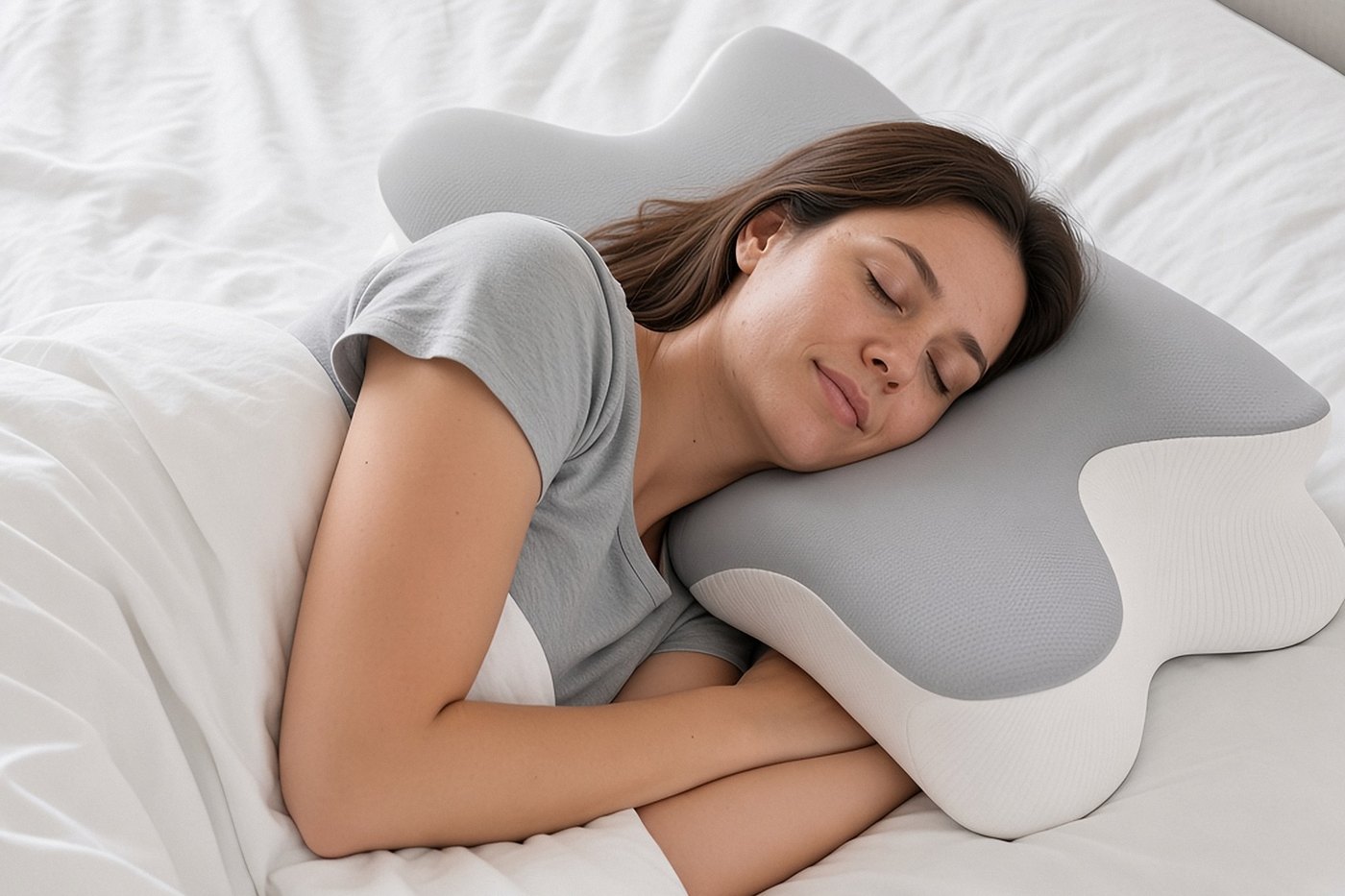
- Aim for a neutral line from your head through your neck to the middle of your back.
- Side sleepers usually need more pillow height than back sleepers.
- Stomach sleeping turns the head for hours – a very low pillow (or none) is often more comfortable.
- Small changes take a few nights to feel normal. Give any new set-up about a week.
Why position matters for your neck
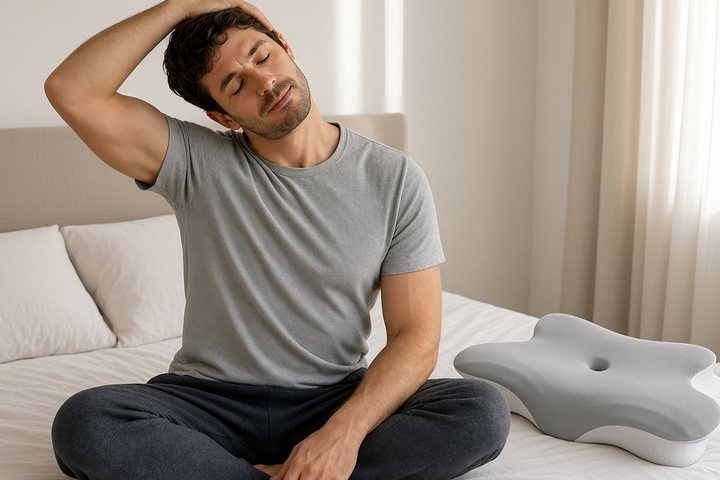
During the day, your neck muscles constantly make small adjustments to hold up your head. At night you want them to switch off. If your pillow is too high, too low or too flat, the head tilts and some muscles stay working – which many people notice as stiffness in the morning.
The goal is simple: a neutral line. Imagine a straight line running from the middle of your forehead, down your nose and chin, to your breastbone (on your back) – or from your nose to the middle of your chest (on your side).
Side sleeping
Side sleeping is the most common position. The space between your ear and the mattress is fairly large – roughly the width of your shoulder – so you need a pillow that fills it without pushing your head up.
- Choose a higher pillow height or edge and rest your head close to the centre.
- Keep your lower arm in front of the pillow, not under it, so your shoulder can settle.
- A small pillow between your knees helps keep your hips and lower back level.
- Avoid tucking your chin to your chest – look straight ahead.
Back sleeping
On your back, the gap to fill is the natural curve under your neck, not the width of your shoulder. That usually means a lower pillow than side sleepers need.
- Your forehead and chin should be roughly level – not pushed forward toward your chest.
- A contour pillow with a raised neck edge supports the curve while the head rests lower in the middle.
- A pillow under your knees can make lying on your back more comfortable for your lower back.
Stomach sleeping
Sleeping on your stomach means your head is turned to one side for long stretches. Many people find this puts their neck at the end of its comfortable range.
If you love your stomach, a very low, soft pillow – or none – is often more comfortable than any contoured pillow. Some people gradually move toward side sleeping by hugging a body pillow, which gives the feeling of lying on the front while the neck stays straighter.
Most people move – and that’s fine
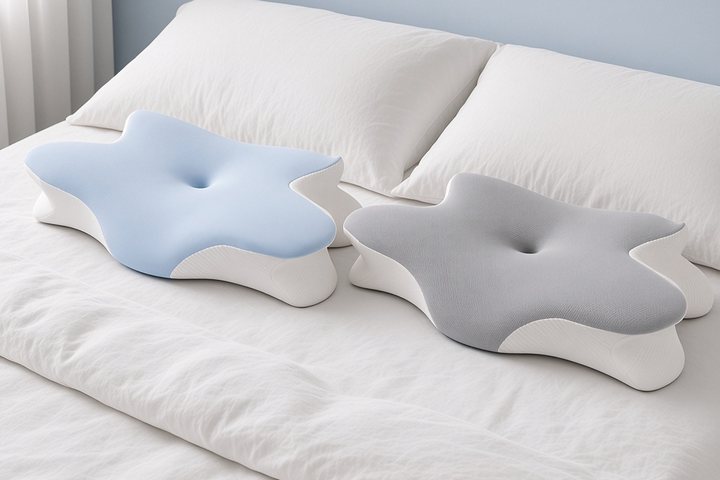
You change position many times a night. That’s healthy. A good set-up simply makes each position comfortable: a contour pillow like the ByNeckPain Contour Pillow has a centre hollow for back sleeping and higher side wings for when you roll over.
Not sure which height you need? Read our guide on how to choose a pillow for neck comfort.
Give it a week
Your body is used to your old set-up. When you change pillow or position, the first few nights can feel unusual. Most people need several nights to settle in – that’s exactly why we offer a 100-Night Comfort Promise.