- Height first: side sleepers typically need more height, back sleepers less.
- Broad shoulders and a soft mattress change what height feels right.
- Contour pillows keep their shape; classic fills need regular plumping.
- Expect a short adjustment period with any new pillow.
Step 1: Height for your position
Your pillow fills the gap between your head and the mattress. That gap depends on how you sleep:
- 1Side sleepers
The gap is about the width of your shoulder. You usually need a higher pillow or the higher edge of a contour pillow.
- 2Back sleepers
The gap is the curve under your neck. A lower pillow, or the lower edge of a contour pillow, usually works best.
- 3Combination sleepers
Look for a pillow with a lower centre and higher sides, so you don’t have to adjust when you roll over.
- 4Stomach sleepers
Usually the lowest, softest option – or no pillow at all.
Step 2: Adjust for your body and mattress
- Broader shoulders → you may want more height on your side.
- Soft mattress → your shoulder sinks in, so you may need less height.
- Firm mattress → your shoulder stays up, so you may need more height.
Step 3: Shape – classic vs. contour
Classic pillows (down, fibre, shredded foam) are soft and adjustable, but tend to flatten during the night and need plumping.
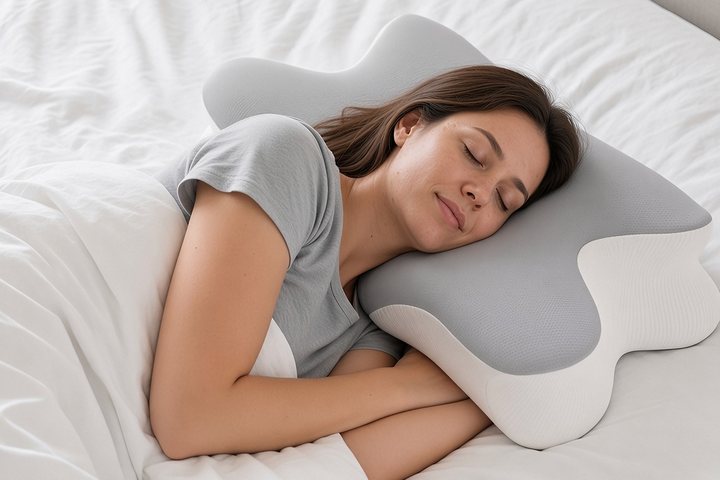
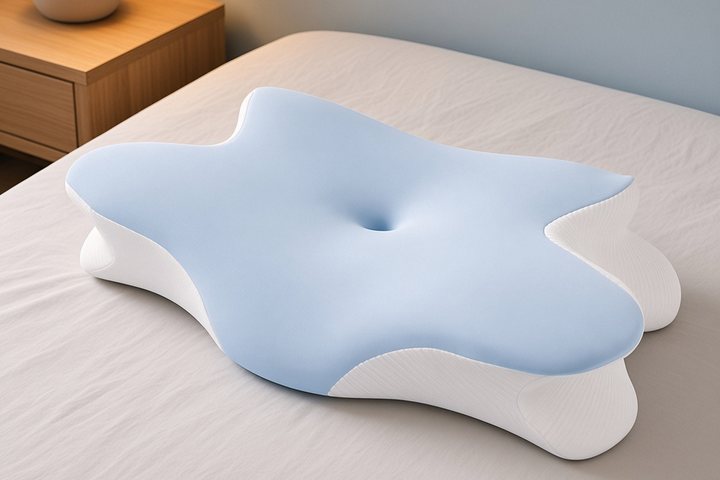
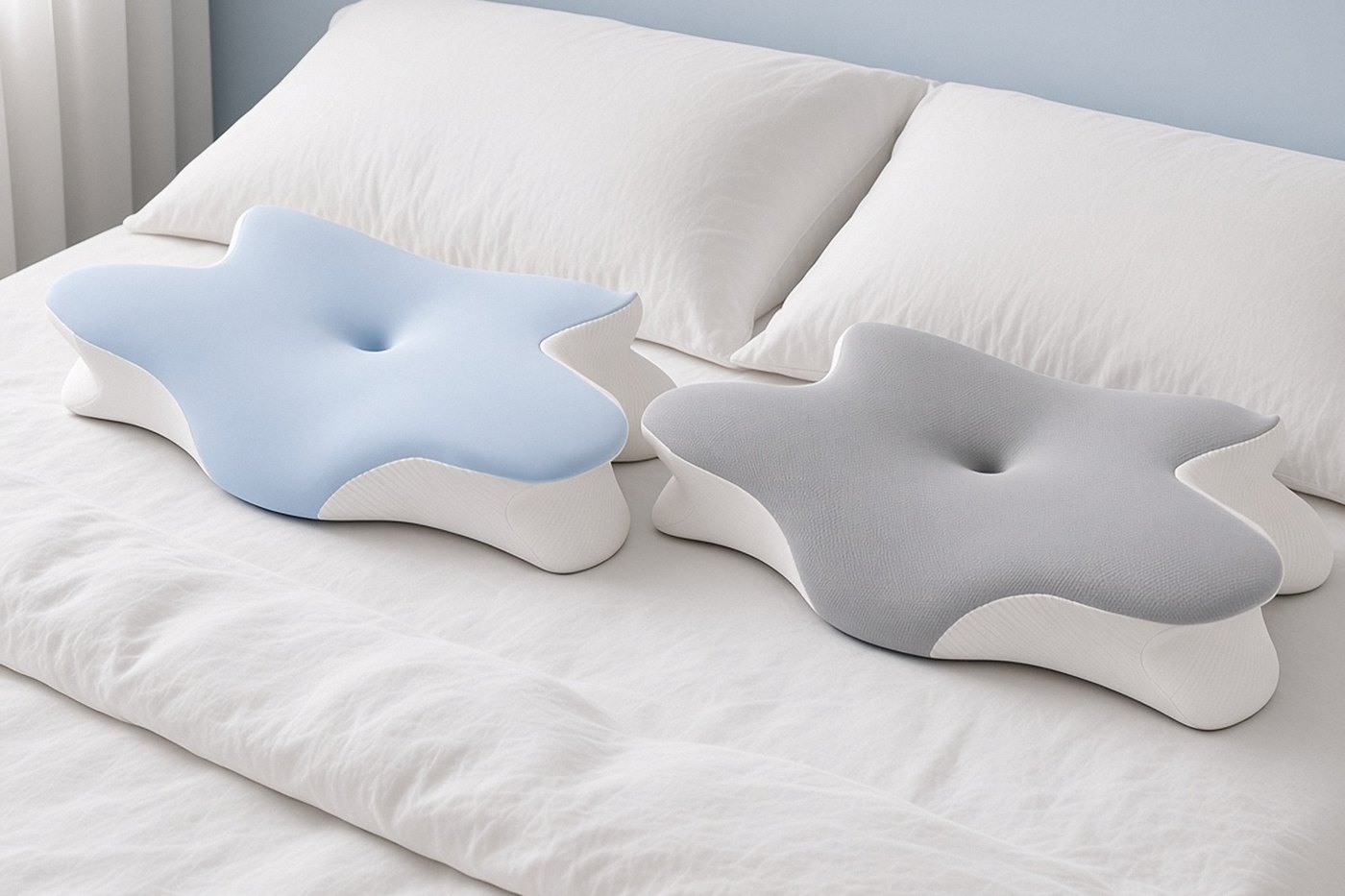
Contour pillows are shaped from one piece of foam. They typically have a hollow for the head and raised edges for the neck. They hold their shape, which many people find gives more consistent support. Some – like our Contour Pillow – add side wings so your shoulder has room when you lie on your side.
Step 4: Material and feel
- Slow-rebound memory foam softens slightly with body warmth and slowly returns to shape. It can feel firm in a cold room – that’s normal.
- Latex is springier and bounces back quickly.
- Fibre/down is the softest but offers the least shape.
- A removable, washable cover makes the pillow easier to keep fresh.
Step 5: Give it a fair test
Your first night on a new pillow is rarely your best. Try it for several nights, test both heights if you have them, and note how your neck feels each morning. Our Sleep Guide e-book includes a simple 7-night tracker for exactly this.
Still unsure which way round to sleep? See the best sleep position for a stiff neck.