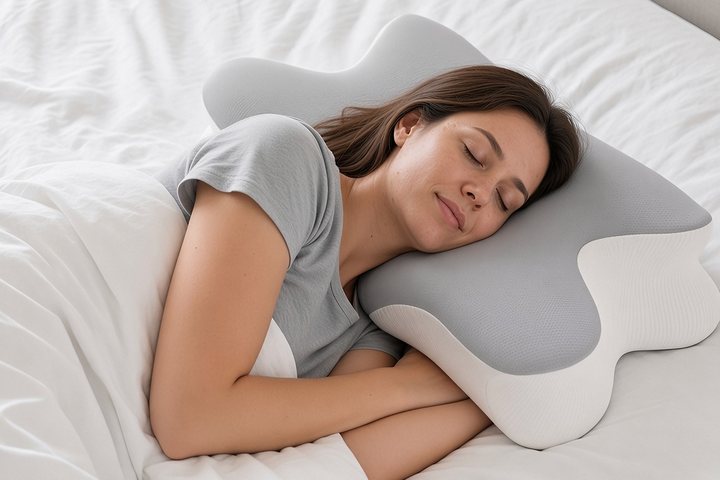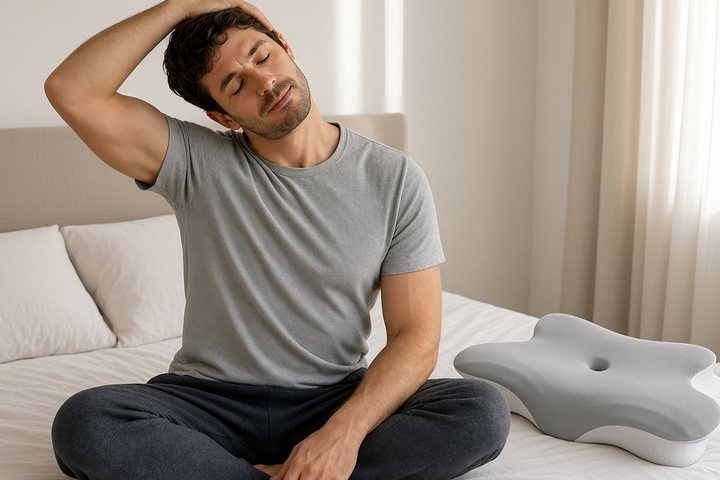
- Pillow height and sleep position are the most common everyday factors.
- Gentle movement in the morning often helps stiffness ease.
- Stiffness after an injury, with fever, numbness or worsening pain needs medical advice.
7 common everyday causes
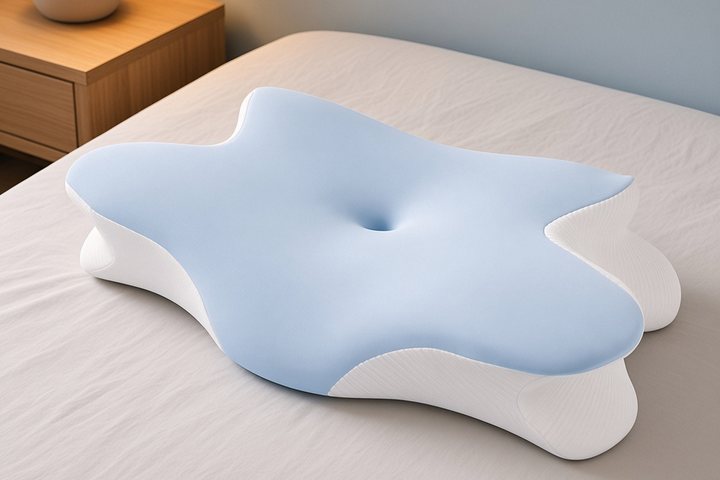
- 1Pillow too high or too low
Your head tilts all night and some muscles stay working. See how to choose a pillow.
- 2A pillow that flattens
Many classic pillows lose height during the night – you start well supported and end up flat.
- 3Stomach sleeping
Your head is turned to one side for hours.
- 4Falling asleep on the sofa or in a chair
Your head drops forward or sideways without support.
- 5Long screen days
Hours of looking down can leave the neck and shoulders tense by bedtime.
- 6Stress
Many people hold tension in their shoulders and jaw – including at night.
- 7Cold drafts
A fan or open window blowing on your neck can make muscles feel tight in the morning.
What you can try
- Check your pillow height using our sleep position guide.
- A warm shower in the morning can help you feel looser.
- Gentle movement: chin tucks, shoulder rolls and slow head turns within a comfortable range.
- Build an evening wind-down with our 6 gentle stretches before bed.
- Adjust your desk and phone habits – see the 5-point posture check.
When to see a professional
Contact a doctor promptly if your neck pain started after a fall, accident or blow to the head; comes with numbness, tingling or weakness in your arms or hands; is severe, constant or getting worse; hasn’t improved after a few weeks; or comes with fever, unexplained weight loss, or pain that wakes you regardless of position. A stiff neck together with fever and a severe headache, sensitivity to light or confusion needs emergency care right away.